


For two years the smartest-sounding story about AI was that it would make things cheaper. More productivity, falling software costs, machines doing the expensive work: a quiet disinflation that would let prices, and eventually interest rates, drift down. This week that story ran into a price list. Apple raised the cost of its MacBooks and iPads, and the reason it gave came down to one word — AI. Not the chatbots. The memory.
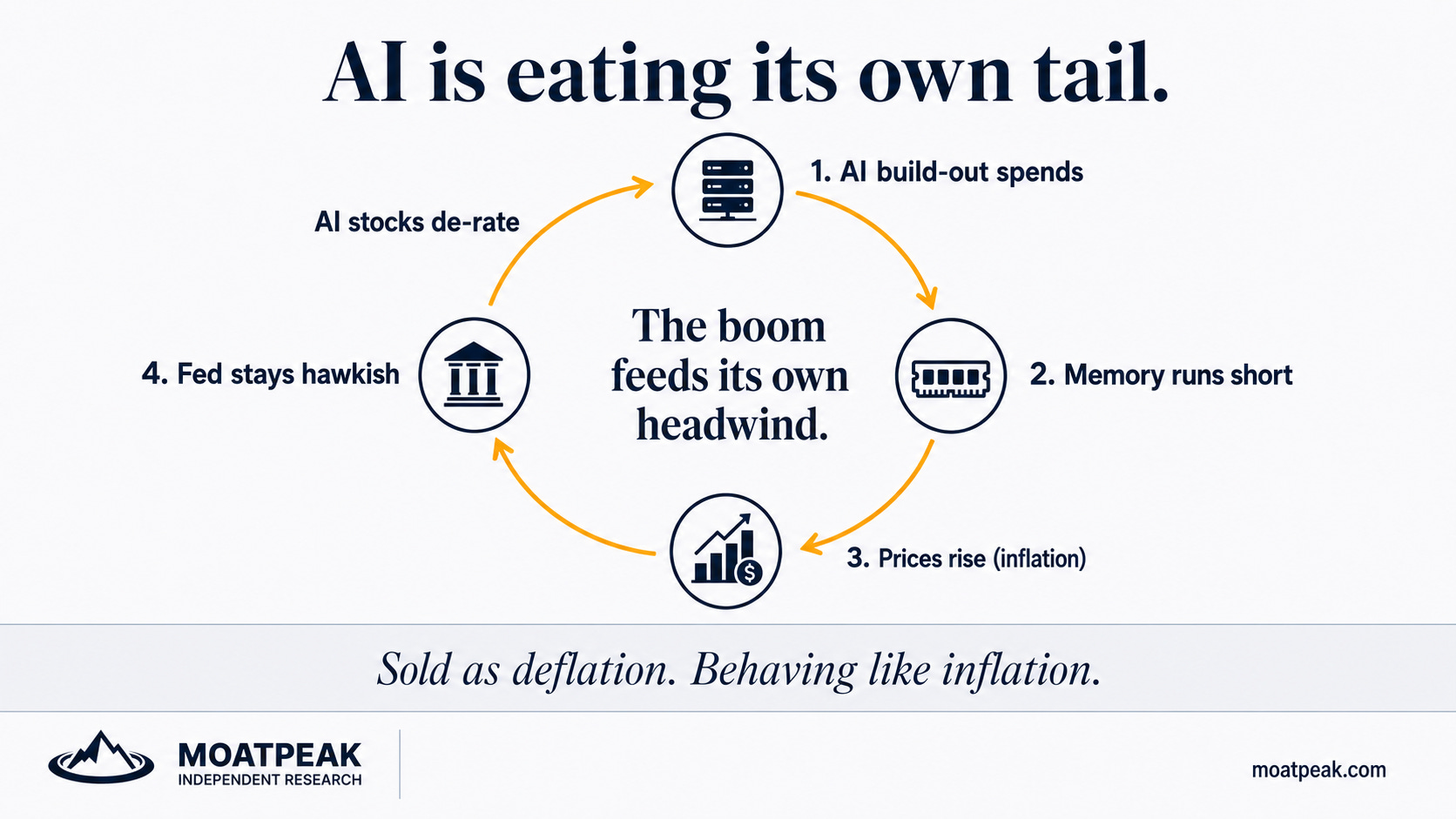
Here’s the mechanic. The thing every AI data centre is starving for isn’t only the famous Nvidia chip; it’s plain memory, the ordinary stuff that holds data while a computer works. The builders have been buying it by the warehouse, and the price has gone vertical — roughly doubling in the first few months of the year, with another big jump already underway. People in the industry are only half-joking when they call it “RAMageddon.” When the giants hoover up the world’s memory to feed AI, there’s less left for everything else, and the price of everything else climbs.
That’s why your laptop got more expensive. The same shortage minting record profits for the companies that make memory is a tax on every company that has to buy it — the laptop makers, the phone makers, the cloud providers. Some absorb it; some, like Apple this week, hand it straight to you. The AI boom isn’t only happening inside your apps. It’s quietly turning up in the price of the device you read them on.
Zoom out and this stops being a gadget story. When one cost shows up across that many products at once, it stops being a tech problem and becomes an inflation problem. The Fed’s preferred inflation gauge just hit its highest level in three years. Plenty of that is still the familiar stuff, energy and services, but a new ingredient is creeping in underneath, and it’s a stickier one. An energy spike fades when the oil flows again. A scramble for the chips the entire future of computing is being built on does not fade on anyone’s convenient schedule.
And here’s the part that should make an AI bull sit up. The boom is now manufacturing the very thing that hurts it. The spending feeds the shortage; the shortage feeds inflation; the inflation keeps the central bank from cutting; and high rates are exactly what punish the expensive, far-in-the-future AI stocks the boom was supposed to reward. The trade has started to eat its own tail. The thing nearly everyone owns for the upside is generating the headwind that caps it.
None of this means AI is a fraud or that the productivity payoff never arrives; over years, it probably does. The useful correction is smaller and more immediate. Stop filing AI under “this makes everything cheaper,” and start watching it as something that, right now, is making a slice of everything more expensive — including, this week, the thing in your bag. The signal to follow isn’t a stock price; it’s the memory price and your own receipts. What that means for how we’re positioned is the desk’s work at moatpeak.com.
Free weekly letter and explainers like this; the daily research, levels and the Daily Compass are at moatpeak.com.
Educational research only — not investment advice. MoatPeak Group, UAB.