


For many quarters, Alibaba’s AI strategy has come under the same kind of concern: although cloud growth is real, the high level of capital expenditure and the negative free cash flow make it difficult to assess the returns. The results for June didn’t eliminate this risk, but they did make the risk easier to measure.
That difference matters. Growth stories have greater value when investors know what might disprove them.
The return framework
A revised model begins with an outlay of RMB100 for AI infrastructure, assumes that the infrastructure will be depreciated over a period of five years, and anticipates that its utilization will increase from 60% to 90% and then reach 100%. When being used fully, every RMB of capital expenditure will produce one RMB of annual revenue, with an EBITDA margin of 45% and a tax rate of 20%.
Under these assumptions, the after-tax cash flow is 25.6 RMB in the first year, 36.4 RMB in the second year, and 40 RMB each year in the mature years. The investment recovers the original 100 RMB by the end of the third year and has increased to 182 RMB by the end of the fifth year. The payback period is approximately 2.95 years, the internal rate of return for the project is 22.1%, and the net present value is 35.6 RMB per 100 RMB invested at a discount rate of 10%.
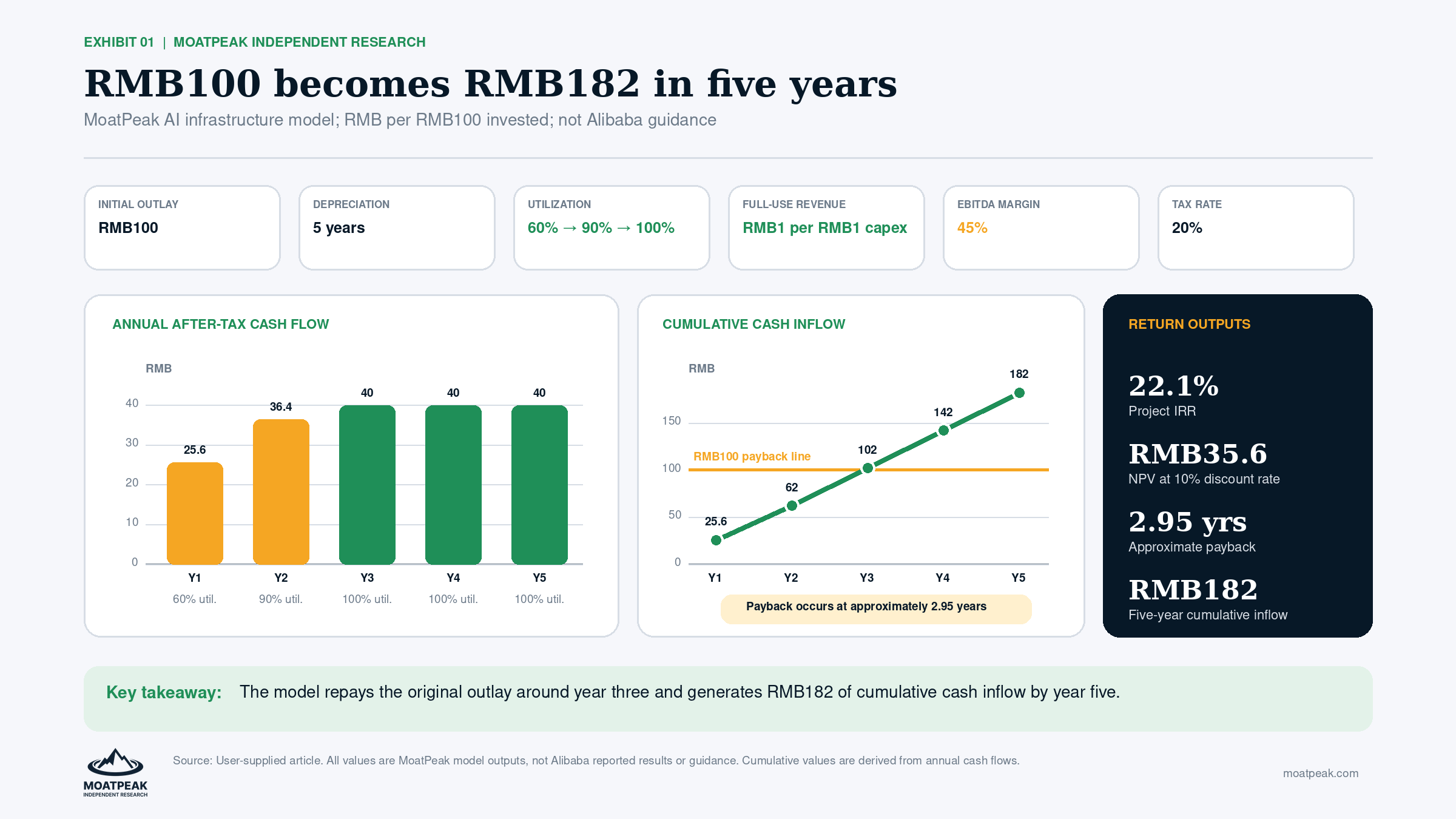
The figures are from the model rather than from Alibaba’s official reports and their value lies in the fact that they base the payback, the cash generation, and the long-term returns on a single set of assumptions.
Why the current margin may understate maturity
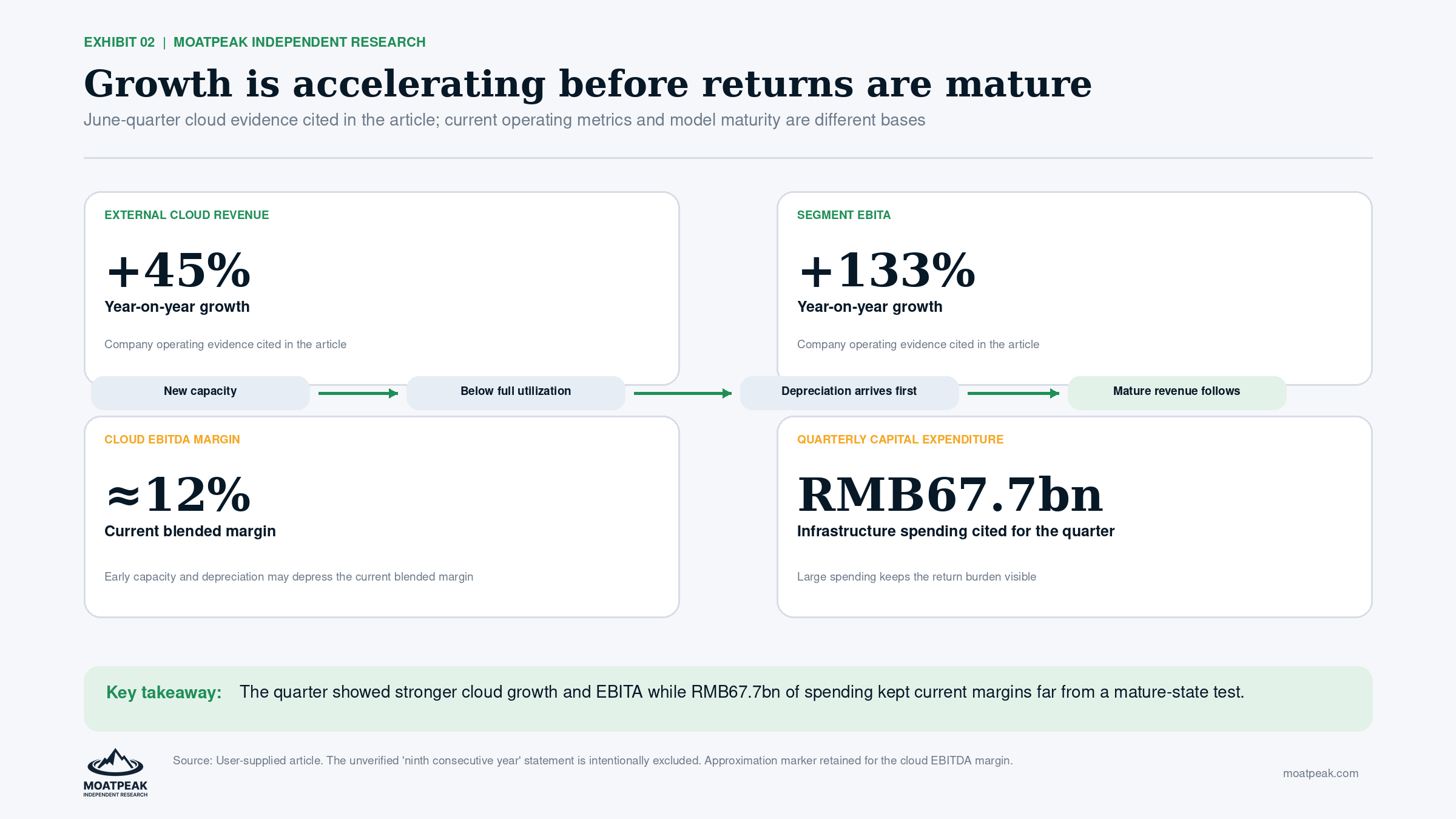
Alibaba’s revenue from its external cloud business increased by 45% year on year, representing its ninth consecutive year of growth. Segment EBITA rose by 133%, and the cloud EBITDA margin reached around 12%. However, the company’s cloud infrastructure is still in its early stages due to its quarterly expenditure of RMB 67.7 billion. The new capacity is operating below full capacity and incurs higher depreciation before it begins to generate mature revenue.
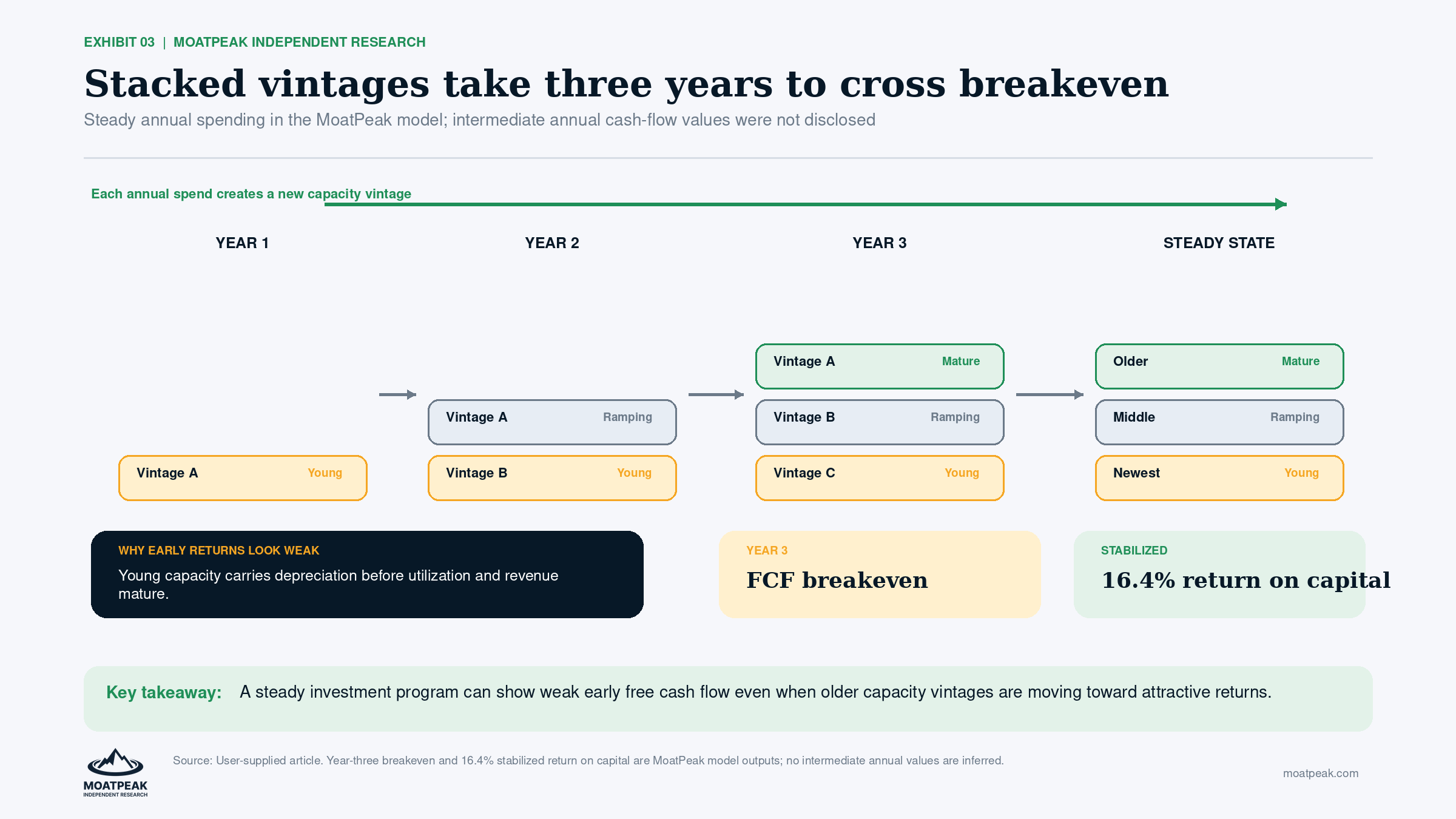
Even if the basic unit economics remain unchanged, the blended return on capital increases as the capacity matures in the case of a stacked-vintage model. When annual spending is steady, the model reaches free-cash-flow breakeven in the third year and achieves a 16.4% blended return on capital once the situation has stabilized.
The scorecard
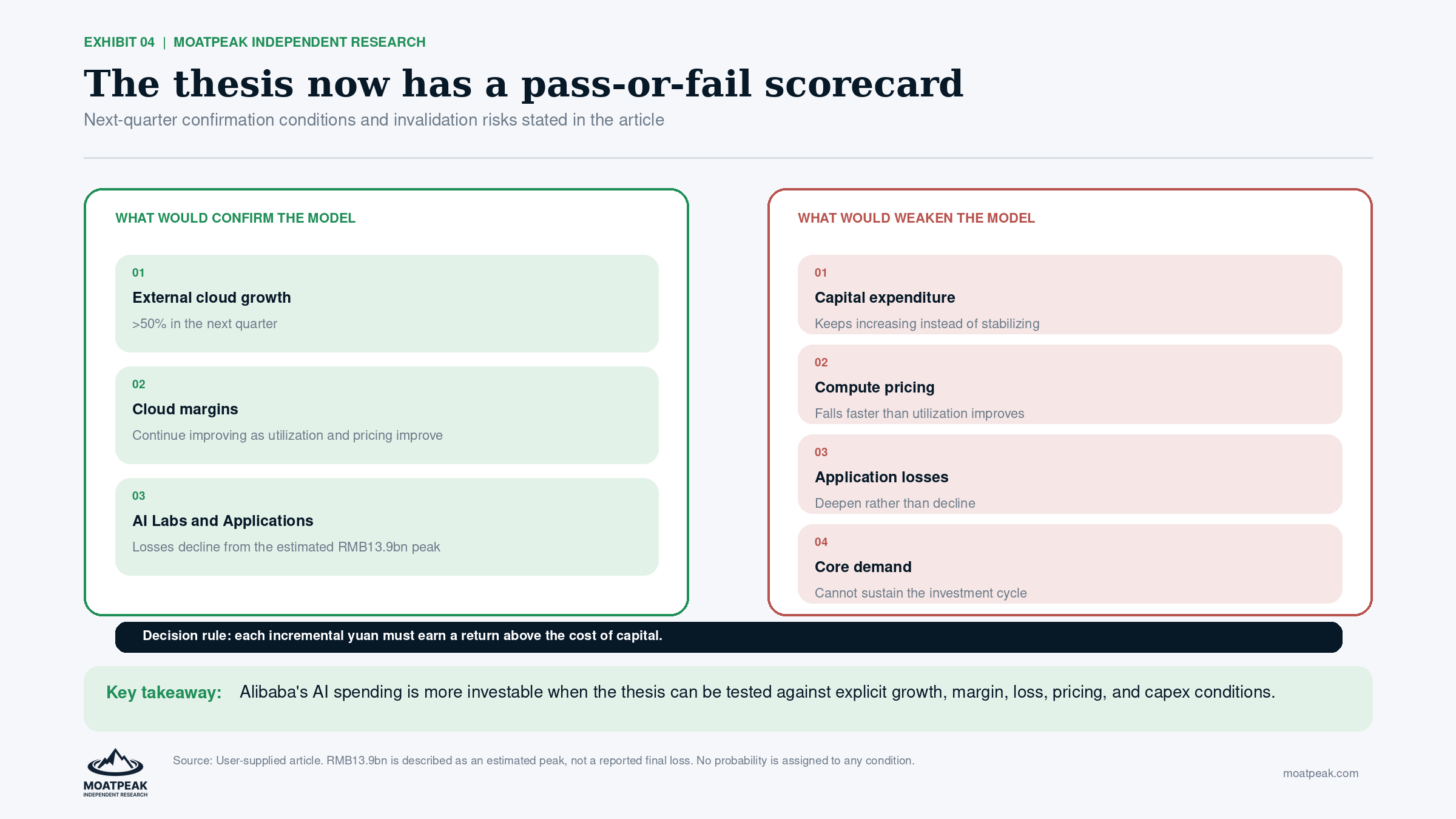
The three points needed to be confirmed in the next quarter are as follows: external cloud growth should exceed 50 percent, margins should continue to improve as both utilization and pricing improve, and the losses at AI Labs and Applications should decrease from their estimated peak of 13.9 billion yuan.
The same risks remain: capital spending could keep increasing rather than stabilizing, compute prices might decrease more rapidly than utilization improves, further losses in applications are possible, or demand could still be too low for the core business to maintain the investment cycle.
Investment conclusion
The discussion regarding Alibaba ought not to focus merely on whether capital spending is good or bad; the real issue is whether each additional yuan invested yields a return that exceeds the cost of capital. The new analysis is encouraging and has now provided the market with clear methods of testing it.
The important point is that Alibaba’s investments in AI are not merely large anymore; they are now something that investors can actually audit.
MoatPeak Team