


Brent crude futures fell $18.81 a barrel over the three sessions to 4 November, down 17 percent. Diesel futures fell by almost the same amount in dollars, $19.74 a barrel. So the premium diesel commands over crude stayed the same, at about $82 a barrel.
That premium is the part of the diesel price that cheaper oil cannot fix. It reflects a shortage of refined fuel, and the shortage is still getting worse.
The tank is the problem
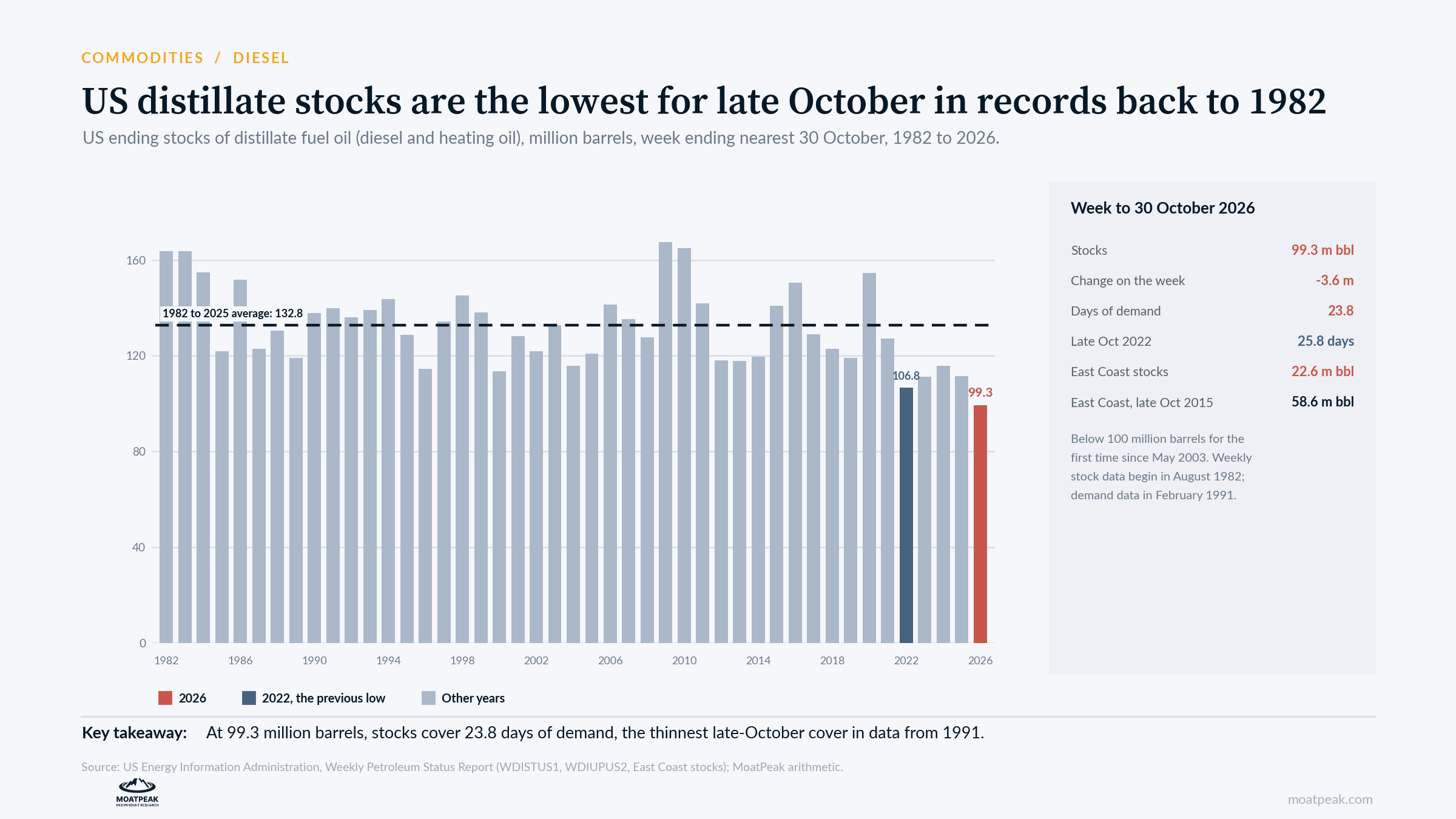
US stocks of distillate fuel, the category that covers diesel and heating oil, fell 3.6 million barrels in the week to 30 October, to 99.3 million. That is the lowest late-October level since weekly records began in 1982, and the first reading below 100 million barrels since May 2003.
Measured against demand, stocks cover 23.8 days, the thinnest late-October cover since the demand data began in 1991. The previous low was 25.8 days, in 2022. On the East Coast, where most heating oil is burned, stocks are 22.6 million barrels, against 58.6 million in late October 2015.
The premium is the signal
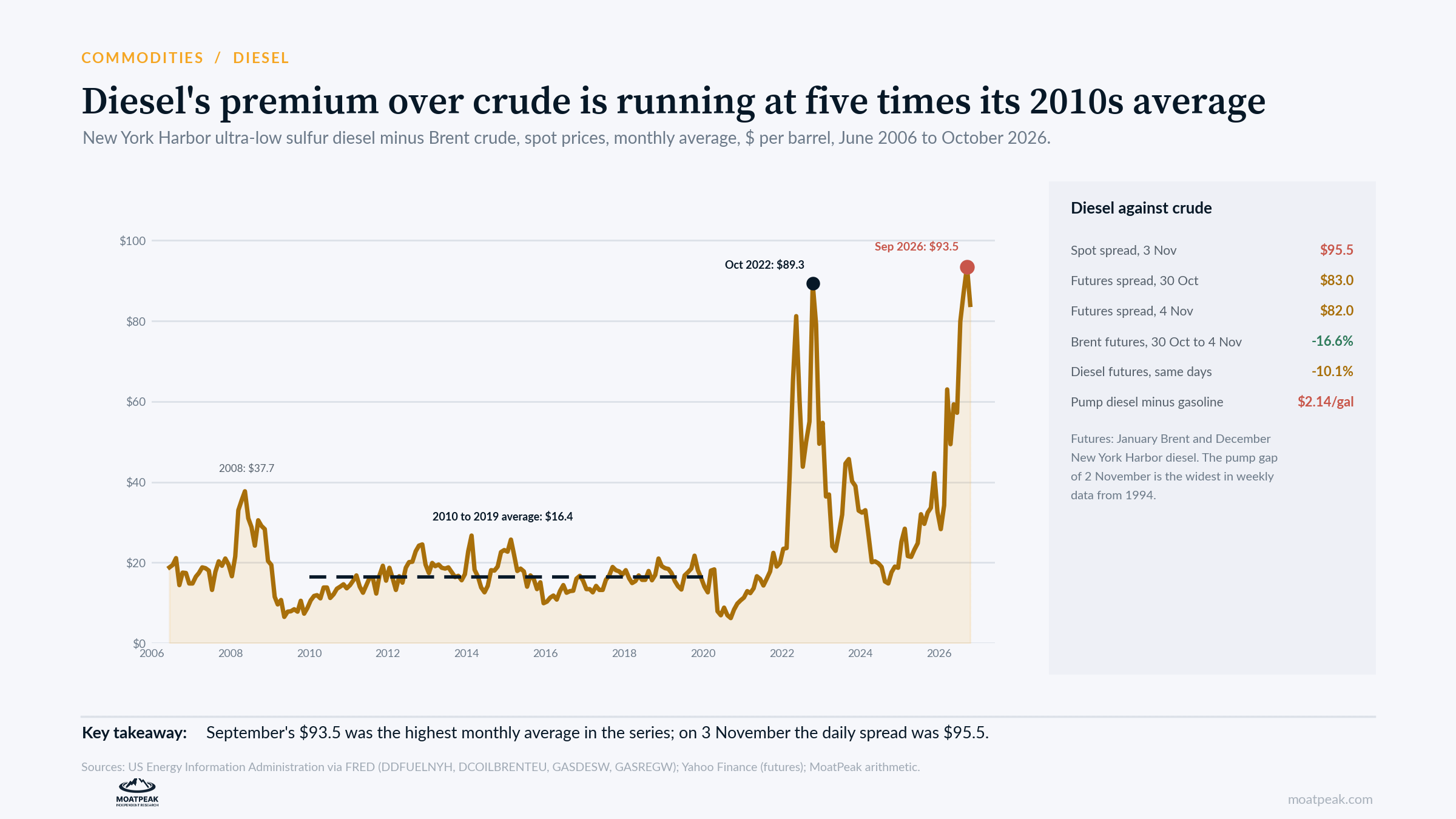
Refiners earn the gap between what they pay for crude and what they get for diesel. In New York Harbor, that gap averaged $16.4 a barrel in the 2010s. It averaged $93.5 in September, the highest monthly figure in data going back to 2006, and $84.0 in October.
The physical market is tighter still. From 30 October to 3 November, Brent spot fell 11 percent while New York Harbor diesel slipped 1 percent, and the spot gap widened to $95.5. At the pump, diesel cost $6.29 a gallon on 2 November, up 68 percent in a year, while gasoline rose 38 percent. The $2.14 gap between them is the widest in weekly data from 1994.
Our read
Markets read falling crude as disinflation, and for gasoline it is. Diesel moves freight, runs farm and construction machinery and heats homes in the Northeast. Its price depends on refined supply, and refined supply cannot be rebuilt in a few weeks.
We expect the diesel premium to stay far above normal until stocks recover, even if crude keeps falling. Two markers would change our view: weekly stocks back above 110 million barrels, still below late October in each year from 2023 to 2025, or a New York Harbor spread below $50.
The case against us
The futures market already expects some relief. On 3 November, December diesel futures traded 6 percent below the spot price, so traders pay more for diesel delivered now than for December delivery.
Demand could drop. At $6.29 a gallon, freight and farm users may cut back, and a slowdown would rebuild stocks faster than any refinery could.
Imports could help. A US premium this wide attracts cargoes from abroad. In 2022, the spread peaked in October and was back to $24 by April 2023.
What it means for your money
Track the spread alongside crude. Refiners’ margins and freight costs follow the diesel premium. A falling oil price with a steady spread changes little for either.
Expect freight costs to lag. Most US trucking fuel surcharges are indexed to the weekly government diesel price, which is still up 68 percent in a year.
Don’t count on quick disinflation in goods. Gasoline relief reaches consumers quickly. Diesel relief, which feeds into transport and food costs, needs inventory first.
What we are watching
Every Wednesday: the government’s weekly stocks report, and whether distillate stocks climb back above 100 million barrels.
The New York Harbor spread: a sustained move below $50 a barrel would mark real easing.
Northeast weather: an early cold snap would draw on East Coast stocks first, where the cushion is thinnest.
Educational research only. Not personalized investment advice. MB “MoatPeak Group”.