


A portfolio of 60 percent stocks and 40 percent bonds is the classic mix for long-term savers. It had one of its worst years in 2022, when stocks and bonds fell together. With the 10-year Treasury yield back above 5 percent, some are making the case for it again, including the claim that over long periods it can come close to an all-stock portfolio.
We checked that claim against returns going back to 1928, using yearly data compiled by Aswath Damodaran of NYU Stern for the S&P 500, including dividends, and for 10-year Treasury bonds. Our 60/40 portfolio is rebalanced at the end of every year.
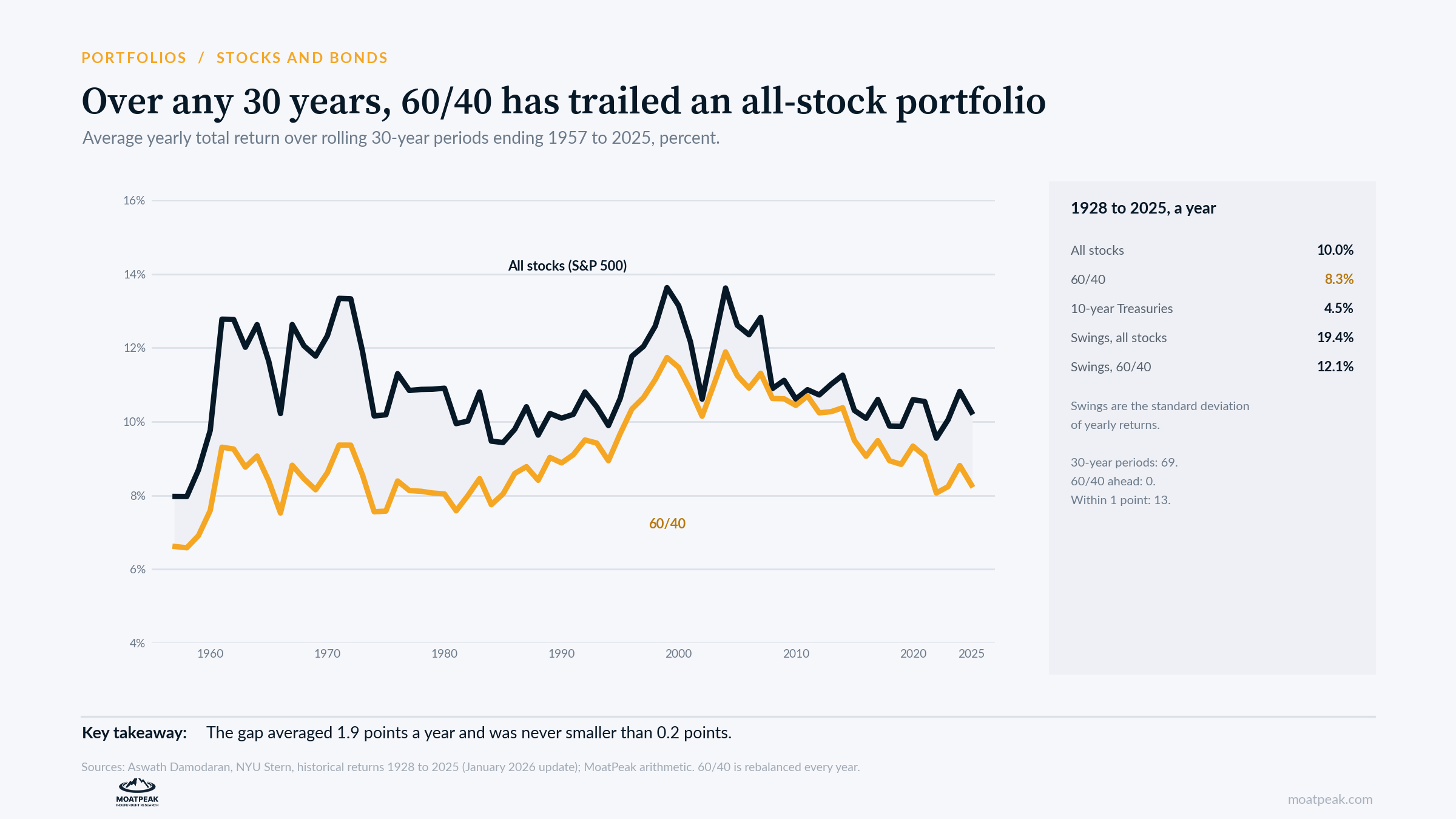
The cost: about 2 points a year
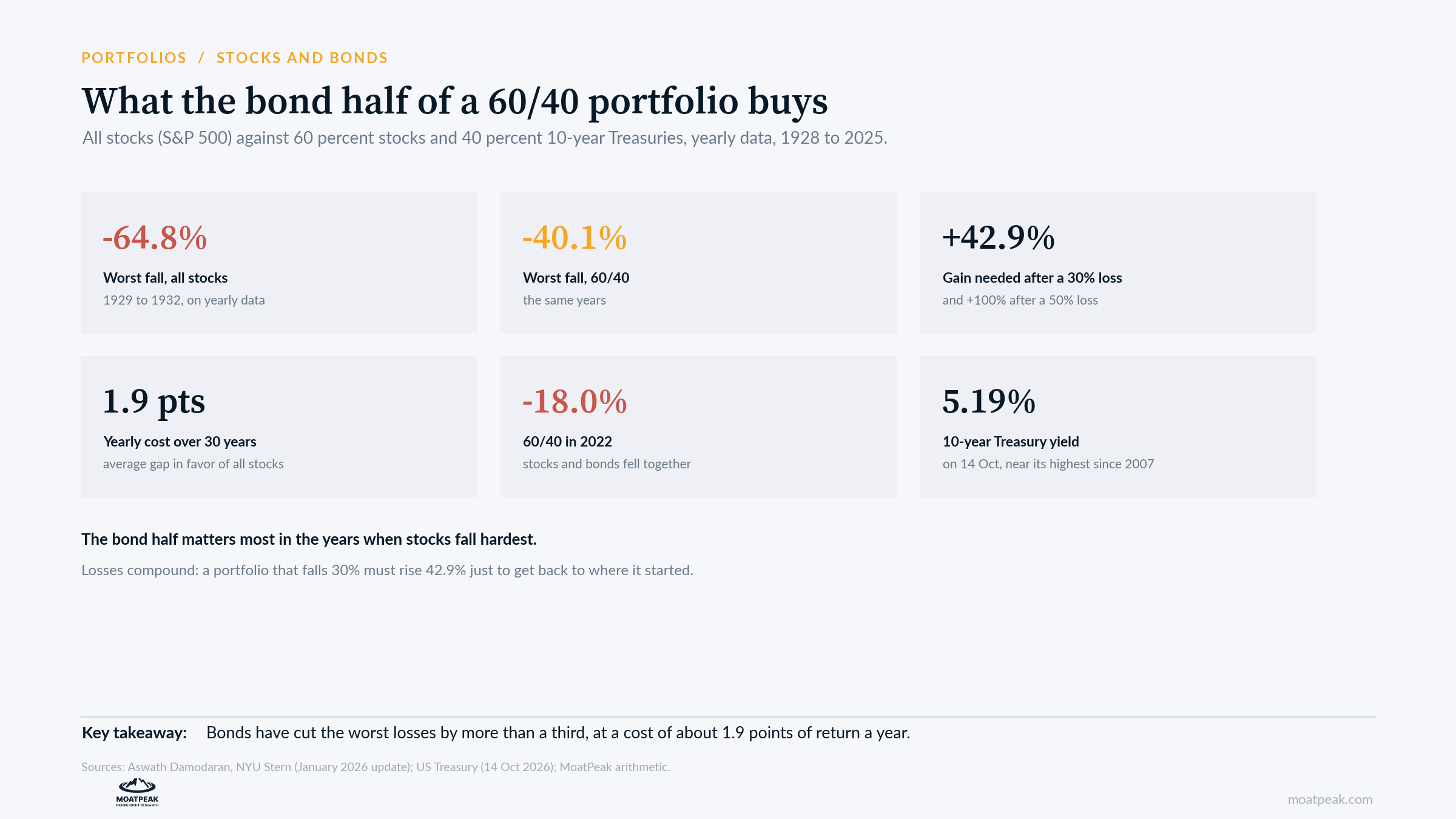
From 1928 to 2025, an all-stock portfolio returned 10.0 percent a year and 60/40 returned 8.3 percent. In every 30-year stretch in the data, 69 in all, stocks came out ahead. The gap averaged 1.9 points a year and was never smaller than 0.2 points. It was within 1 point in 13 of the 69 periods.
Small gaps compound. $100 put into stocks in 1928 grew to about $1.16 million by the end of 2025. In 60/40 it grew to about $257,000.
The benefit: smaller holes
The yearly returns of 60/40 swung far less: a standard deviation of 12.1 percent, against 19.4 percent for stocks. In the worst stretch, from 1929 to 1932, stocks lost 64.8 percent on yearly data. The 60/40 mix lost 40.1 percent.
That matters because losses compound too. After a 30 percent fall, you need a 42.9 percent gain to get back to where you started. After a 50 percent fall, you need 100 percent. Smaller losses also make it easier to stay invested, and investors who sell after a crash lock in the loss.
Why it is back in the conversation
Starting bond yields have tended to be a good guide to what bonds return over the following decade. The 10-year Treasury yield closed at 5.19 percent on 14 October, after rising above 5.2 percent in late September for the first time since 2007. That is above the 4.5 percent a year that 10-year Treasuries returned on average since 1928.
The case against us
Yearly data hide the worst moments inside each year, so the real falls were deeper for both portfolios. The past may not repeat: bonds earned unusually high returns in the 1980s and 1990s, when yields were falling from very high levels. And in an inflation shock like 2022, bonds and stocks can fall together, which is exactly when a 60/40 investor wants the bond half to help. In 2022, our 60/40 portfolio lost 18.0 percent, its third-worst year since 1928.
What it means for your money
Decide what you are paying for. A 60/40 mix buys a smoother ride, at the price of lower long-run returns.
Know your loss limit. If a 40 percent fall would make you sell, the real cost of an all-stock portfolio may be higher than 2 points a year.
Check your mix. After years of strong stock returns, many portfolios hold more stocks than their owners planned.
What we are watching
The 10-year Treasury yield: whether it holds above 5 percent.
28 October: the Fed’s decision on interest rates.
2027: whether stocks and bonds move in opposite directions again when growth slows, as they usually did in the two decades before 2022.
Educational research only. Not personalized investment advice. MB “MoatPeak Group”.