


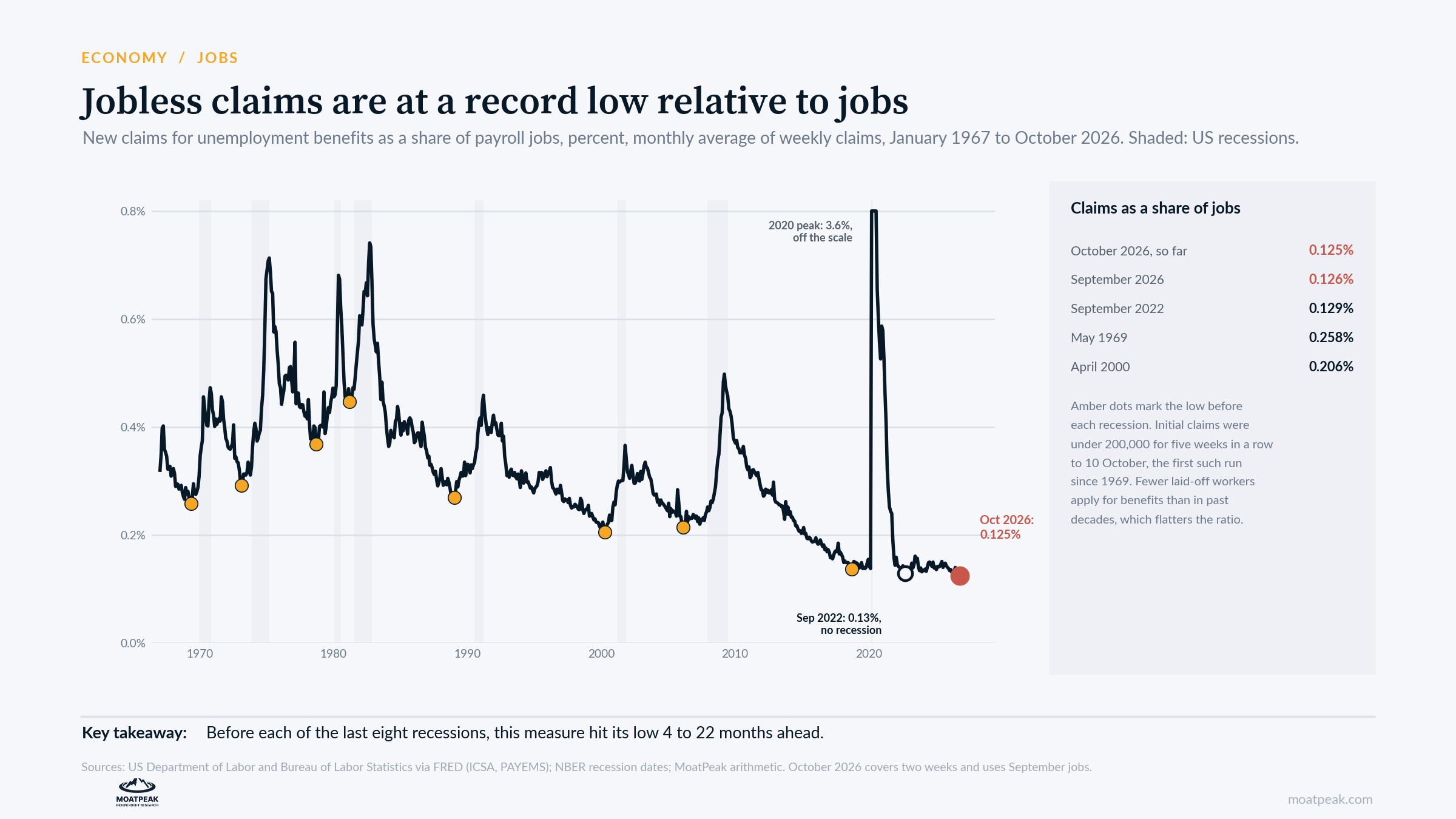
New claims for unemployment benefits were 199,000 in the week to 10 October, the Labor Department said on Thursday. It was the fifth week in a row below 200,000, the first such run since 1969. Measured against the number of jobs, claims have never been lower in data going back to 1967: 0.126 percent of payrolls in September and 0.125 percent so far in October.
The usual reading is that the labor market is in good shape. We see it differently. A record low in claims tells you where you are in the cycle. It has said much less about when the cycle ends.
Few layoffs, few hires
Claims measure firing. They say little about hiring, and hiring has slowed. Payrolls grew by an average of about 51,000 a month in the three months to September, and the unemployment rate rose to 4.2 percent from 4.1 percent. Companies are keeping the workers they have and adding few new ones.
That mix looks calm, and it can last for a while. But it leaves less room for error. When hiring is slow, people who lose their jobs can take longer to find new ones, so even a modest rise in layoffs can push unemployment up.
What history says
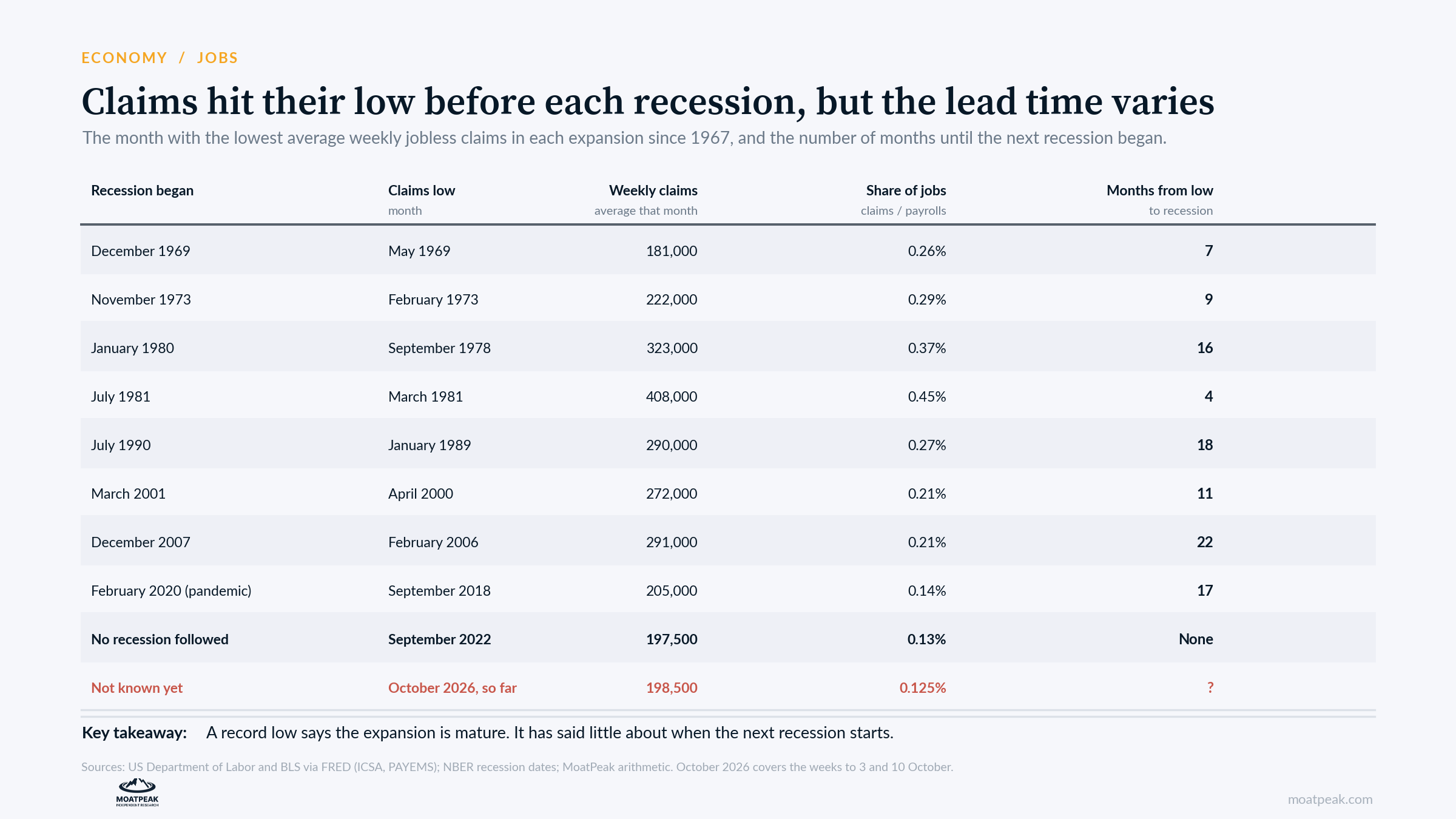
Claims tend to hit their lowest point late in an expansion. Before each of the eight recessions since 1969, the monthly average of weekly claims bottomed between 4 and 22 months before the downturn began, and about a year before in the typical case.
The closest parallel may be 1969. Claims hit their low in May of that year, while the Fed was raising rates to fight inflation. The recession began in December. Today, consumer prices are 3.7 percent higher than a year ago, and futures markets this week priced in a real chance that the Fed raises rates at its meeting on 27 and 28 October.
The case against us
The low is only clear in hindsight. Claims averaged 197,500 a week in September 2022, rose 27 percent by June 2023, and no recession followed. They are back near that level now.
The comparison with past decades also flatters today. A smaller share of jobless workers collects benefits than in the 1970s: continuing claims equal about a quarter of the unemployed now, against nearly half then. And fewer people are collecting benefits than a year ago, 1.71 million against 1.93 million, which suggests that people who lose their jobs are still finding work.
If the labor force is growing more slowly, as lower immigration suggests, the economy also needs fewer new jobs each month to keep unemployment steady. Weak payroll numbers may then be less worrying than they look.
What it means for your money
Read a record low as a sign of a mature cycle. On its own, it has been a poor guide to timing.
Do not overreact to one bad stretch. Claims rose 27 percent in 2022 and 2023, and no recession followed.
Watch the Fed. In 1969, claims bottomed while the Fed was tightening to fight inflation. A rate rise now would test how sturdy the jobs market really is.
What we are watching
22 October: weekly jobless claims, released every Thursday.
27 and 28 October: the Fed’s rate decision.
6 November: the October jobs report.
Educational research only. Not personalized investment advice. MB “MoatPeak Group”.