


When the chips sold off, everyone reached for the same headline: the AI bubble is popping. The data tells a narrower and stranger story, and the difference changes what you should do about it.
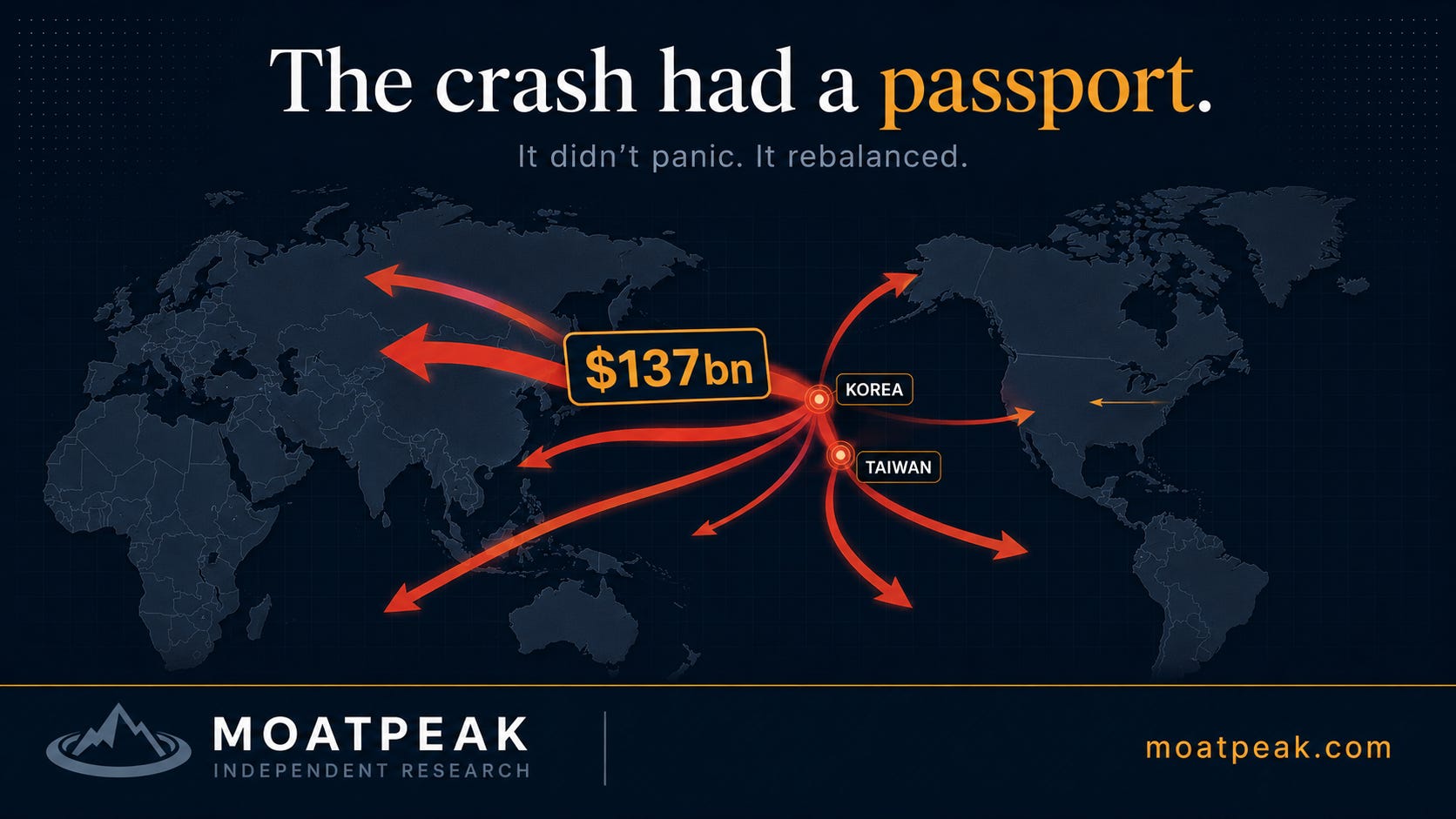
Start by locating the damage. The epicenter was North Asia, not Wall Street. Korea took the worst of it, its two big memory makers each falling double digits, the main index dropping sharply enough to trigger a trading halt. The United States felt it through semiconductors, where the chip index fell about 20 percent from its June peak, but the broad S&P 500 was comparatively calm. If this were a pure verdict on AI, the pain would not have carried a passport this specific.
Now the flow underneath. Foreigners pulled a record amount, around 137 billion dollars, out of Asian emerging-market equities in the first half of this year, the fastest pace in more than 16 years, with Korea and Taiwan bearing the brunt.
Here is the nuance the bubble story misses entirely. Analysts describe this selling not as a straightforward risk-off panic but as rebalancing. Funds trimming their biggest, most concentrated winners to manage concentration risk, and rotating toward laggards. The selling was a function of how crowded the trade had become, not a fresh judgment on whether AI demand is real.
State the mechanism plainly, because it is the whole lesson. A crowded trade does not need bad news to fall. When everyone who wanted in is already in, there is no marginal buyer left, and even routine, unemotional rebalancing turns into a one-way exit. The bad-news headlines that week, a price hike here, an IPO delay there, were the excuse the crowd used. The crowding was the condition that made the fall possible.
Why the passport matters for what you actually do. If the fragility was concentrated in Korea and Taiwan tech, then hedging the S&P was hedging the wrong thing, and reading the move as a broad American “AI is over” signal was reading the wrong tape. The tail was geographic, not thematic, and you cannot hedge a geographic tail with a domestic index.
The contrarian read that follows is not a bottom call. It is this: the same crowding math that made these names fragile on the way down is also what eventually makes them interesting again once the de-crowding clears, because nothing in the flow data says demand for the underlying buildout actually changed. Why it fell, positioning, tells you more about what comes next than how far it fell.
We will keep ourselves honest. Rebalancing and fundamentals can rhyme. If demand genuinely rolls over, cancelled orders rather than mere price hikes, then the crowding story and the bubble story converge into the same thing. The next set of mega-cap earnings is the tiebreaker, and we hold our conclusion until it prints.
The desk’s discipline is to ask where a selloff happened and what caused it before accepting what it gets called. This one had a passport. The map, and the levels we are watching, are at moatpeak.com.
Educational research only. Not personalised investment advice. MB “MoatPeak Group”.