


The headline today writes itself. Oil spiked because of the Middle East. Brent pushed above 86 dollars, up more than 10 percent in a matter of days, after the US reimposed a blockade on Iranian shipping through the Strait of Hormuz and a reported missile strike hit two tankers. All true. And it hides the more useful half of the story, which is that the size and speed of this move were loaded weeks before the news ever broke.
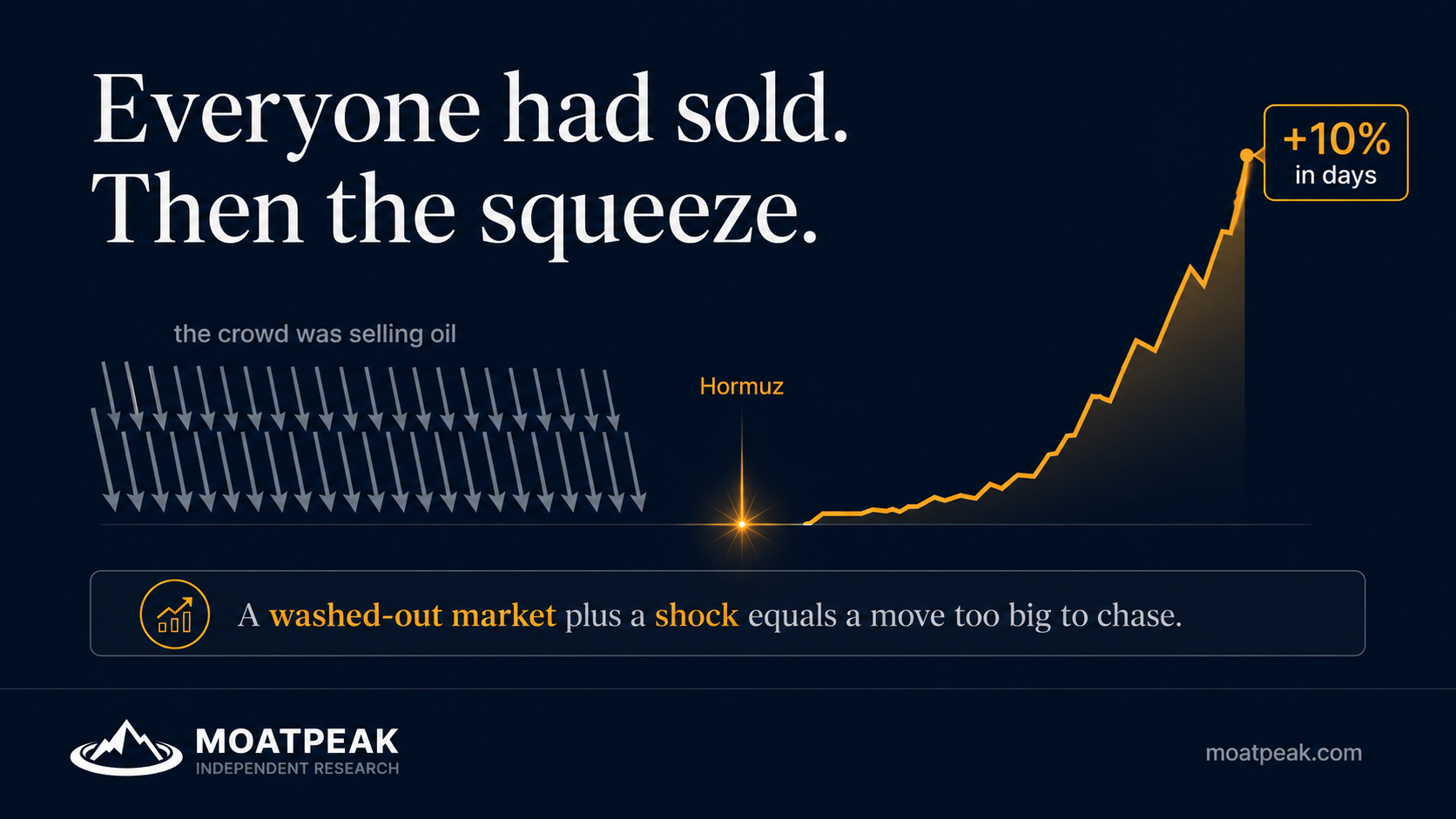
Start with what the crowd was actually doing before the tankers were hit. It was selling oil. Public positioning data shows speculators spent the run-up cutting their bullish bets on crude by roughly a third, down to about 76,000 net-long contracts from over 110,000, one of the sharper bearish shifts in a while. The story of the summer was too much oil: soft demand, ample supply, a market that had quietly given up. So by the time the strait caught the headlines, the tape was lopsided. Almost everyone who was going to sell had already sold. The people still in the trade were leaning the wrong way.
That is the setup for a squeeze, and a squeeze is a very different animal from a fundamental rally. When a market has already sold hard and a shock arrives, the move up is not patient buyers expressing a view on supply and demand. It is the offside crowd scrambling to get out of the way. Underweight players chase, short hedges get covered, and every one of those forced purchases is itself the rally. The buying causes the price, the price causes more buying. This is why a market that has already sold to the bone can move violently on news that, in a balanced tape, would have moved it a little. The fuel for the biggest moves is rarely the headline. It is how one-sided the crowd was standing when the headline hit.
Here is the part that keeps this honest, because it cuts against the excitement. A positioning squeeze is not a new era for oil, and chasing the spot price after a double-digit spike is the late, crowded trade, not the smart one. The same mechanics that drove it up run in reverse. This move sits on top of whatever the real supply-and-demand floor is, and a single de-escalation headline can unwind the squeeze almost as fast as it built. You saw a preview of exactly that this week: the moment Trump backed off a proposed 20 percent transit toll, prices came off their highs. So the discipline is not to pick a side of a geopolitical event nobody can forecast. It is to understand that you are looking at a positioning event on a fundamental base, thrilling to watch and dangerous to chase.
Now the reason this matters even if you never trade a barrel of oil in your life. An oil spike is an inflation impulse, and this one arrived at the worst possible moment for everyone still betting on rate cuts. Just this week, Governor Waller, one of the most reliably dovish voices at the Fed, turned and said the Fed may need to hike in the near term if inflation stays hot, and that the balance of risks has tilted toward inflation over jobs. The market repriced fast: futures went from betting on cuts to pricing roughly a 77 percent chance of a September hike, up from around 58 percent a week earlier. Pour a fresh oil shock into that and you are not looking at a gas-pump story, you are looking at a rates story. The same pressure is showing up abroad, with Japan’s 30-year-high bond yields blamed partly on oil-driven inflation. The tanker in a strait you will never sail connects, in a few steps, to the mortgage rate in your town.
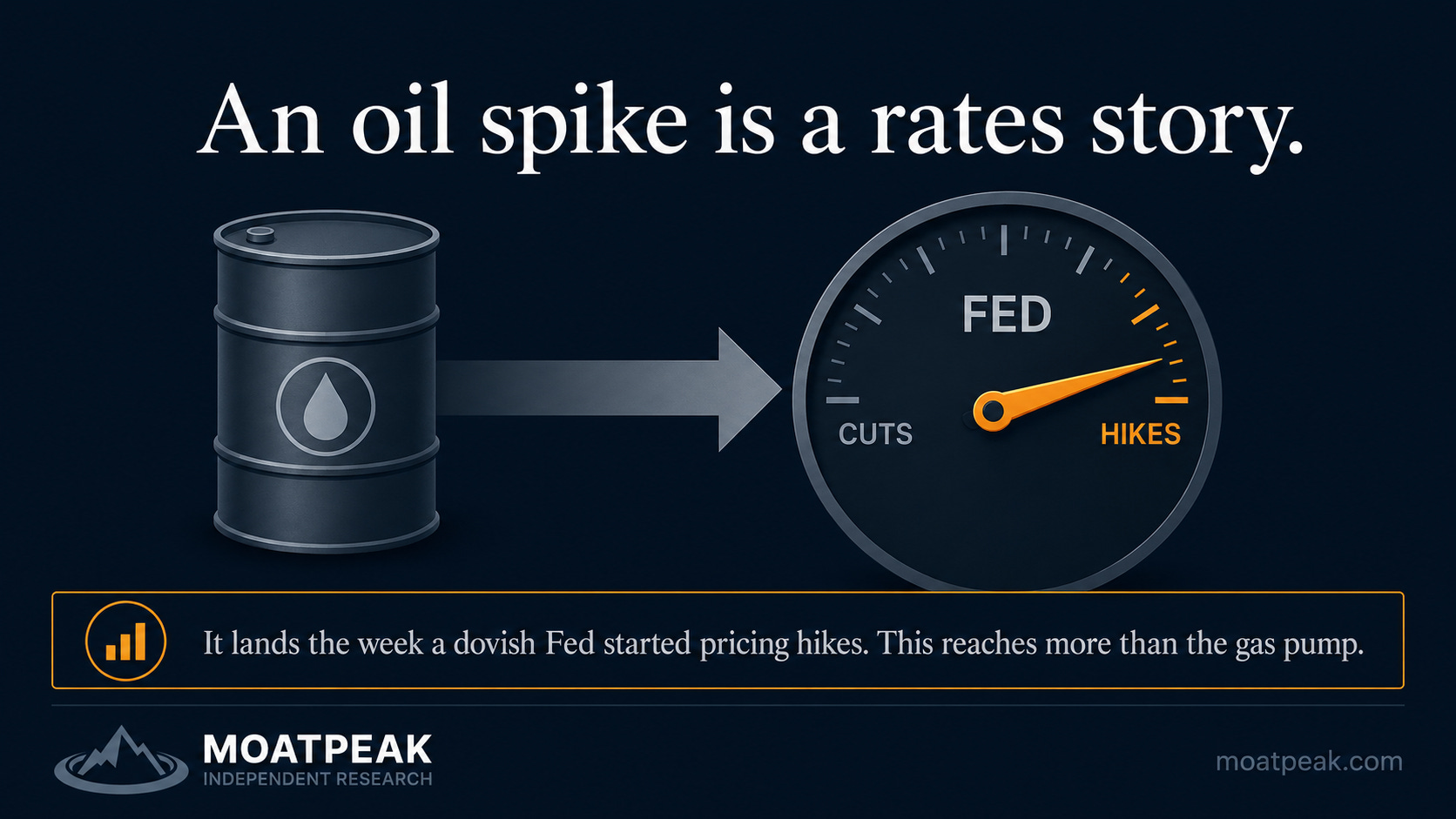
So hold both halves at once, which is the whole point. The move is real but its violence came from positioning, not from a permanent change in the world’s oil balance, which makes it quick to chase and quick to reverse. And the piece of it that outlasts the squeeze is not the price of crude, it is the inflation it feeds into a Fed that just stopped talking about cuts. Two lessons worth keeping. Before you react to any violent move, ask who was already leaned the wrong way, because that, and not the headline, sets the size of it. And watch the strait if you like, but watch the Fed’s inflation gauge more, because that is the part of this that reaches your whole portfolio.
This is the kind of thing we take apart every day, in the open. The daily read is the desk’s job at moatpeak.com.
Educational research only. Not investment advice. MB “MoatPeak Group”.