


The S&P is up around 28% and making new highs. Take the falling dollar back out, though, and the number drops to about 18%. Same index, same year, very different story depending on the ruler you measure it with.
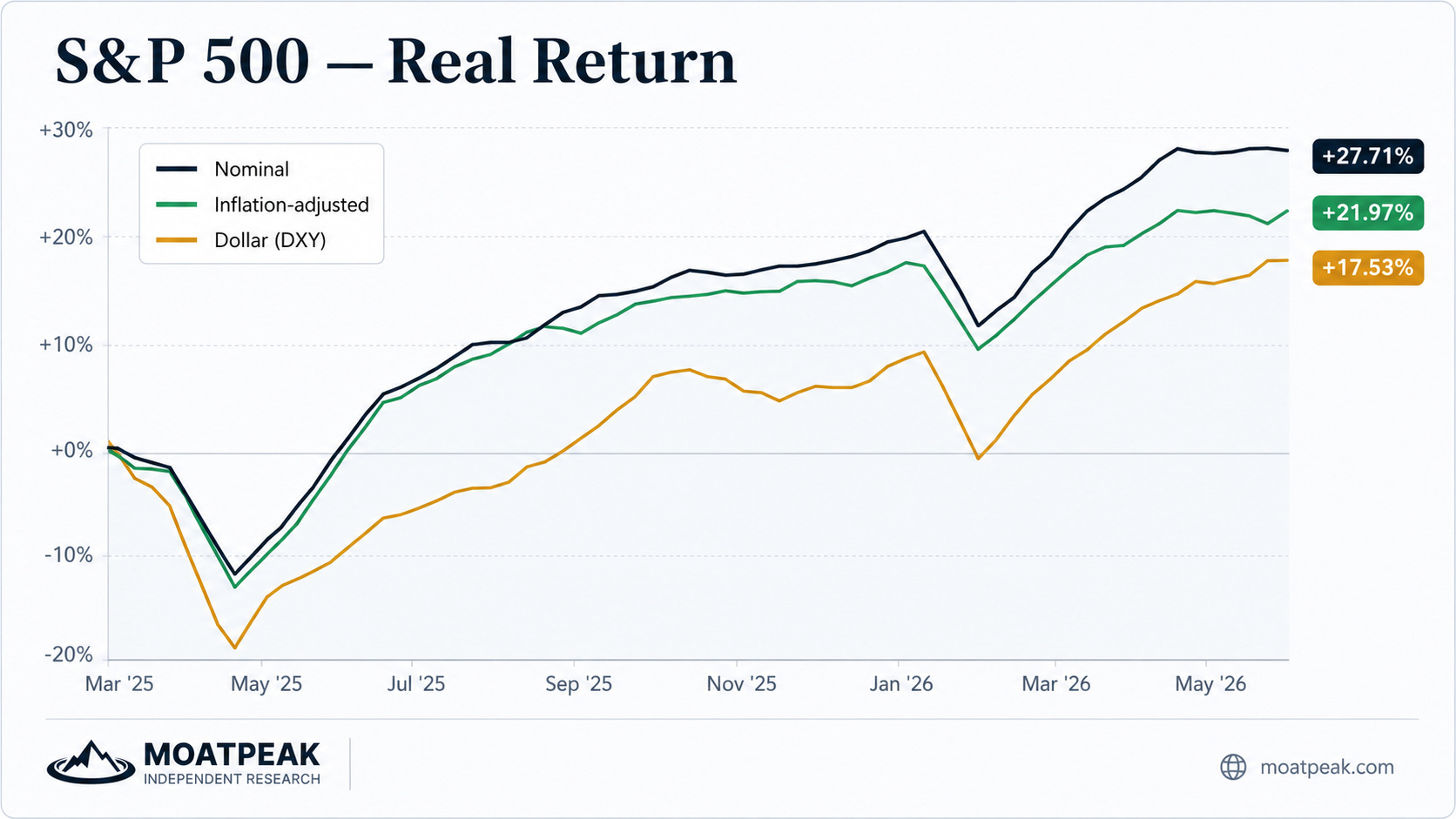
That’s the part worth sitting with. An index is priced in dollars, so when the dollar quietly loses value — to other currencies, to the price of stuff — the index can keep climbing even if the businesses inside it haven’t done much. Some of “new all-time high” is just the yardstick getting shorter.
Adjust for inflation alone and you land in the middle, around 22%. Look at the three lines and the order does the talking: nominal on top, inflation-adjusted below it, dollar-adjusted at the bottom. The gaps between them are the share of the rally that’s measurement, not value.
Where you live decides how much of this you feel. Earn and spend in dollars and the currency drop barely registers. Keep your money in euros, or zloty, or anything that isn’t the dollar, and that bottom line is the one that’s actually yours — and the record you keep reading about is a fair bit smaller in your account.
It’s also why a screen full of green can sit on top of a fairly tired market. The headline number is getting help from a softer dollar, and lately from oil that’s been buffered down rather than fixed. Calm on the surface, less underneath than it looks.
This isn’t a call to sell anything. It’s a reminder to read the number honestly. A record in dollars isn’t the same as a record in value, and in your own currency it can be smaller still. What we actually do about it — the hedges, the positioning — is the desk’s work at moatpeak.com.
Free weekly letter and explainers like this; the weekly research, levels and the Daily Compass are at moatpeak.com.
Educational research only — not investment advice. MoatPeak Group, UAB.