


The Federal Reserve will hold its meeting on Wednesday and is facing pressure to increase rates, even though such a move would not be surprising.
Over the course of two days two inflation reports were released and, when you consider them together, they tell a simpler story than the headlines indicate.
What the consumer price report actually says
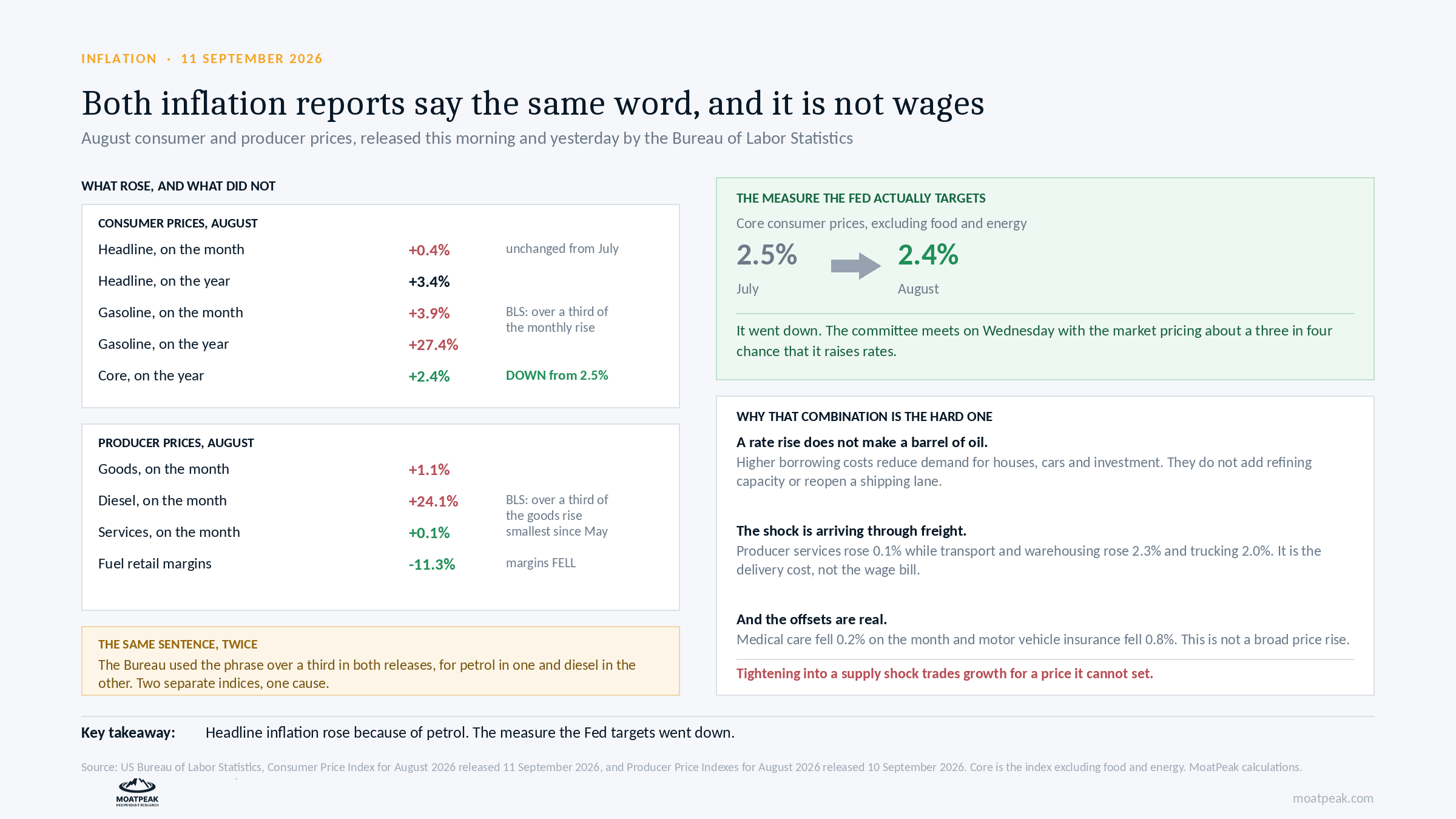
In August, consumer prices rose 0.4 percent and 3.4 percent on an annual basis, the same annual rate as in July.
Gasoline rose during the month and by 4% over the year; the Bureau states that it accounted for “over one third” of the total monthly increase in all items. Overall, energy prices rose 16.3% over the year.
The less widely reported figure shows core inflation rose by 0.3 percentage points month on month and by 2.4 percentage points year on year, compared with 2.5 percentage points in July.
It decreased. The rate the central bank aims for, especially in cases like this, is now only half a point above the 2% target.
The producer report says the same thing in a different vocabulary.
The producer price index report issued yesterday—which tracks the prices companies charge one another before goods reach stores—showed the same pattern.
The price of goods rose 1.1 percent over the previous month, the highest figure since May. Three-quarters of this rise was due to energy, and diesel alone accounted for more than a third of the overall increase, up 24.1 percent in a single month. The Bureau released that information.
Producer services rose by 0.1 percent, the smallest increase since May; margins in fuel retailing fell by 11.3 percent, transport and warehousing rose by 2.3 percent, and trucking rose by 2.0 percent.
Therefore, it is the freight costs that are being affected, not the wages; the increased cost of transporting goods is now appearing in the prices of the goods.
In the two releases carried out within twenty-four hours, the Bureau employed the expression ‘over a third’—using it once in the case of petrol and once in the case of diesel. Although the indexes were different, the reason was the same.
Why this is the hardest combination for a central bank
At the moment, the market estimates there is a 75% probability that the committee will increase rates on Wednesday. Here is why we believe that is not the best approach, and why we prefer to explain our reasons rather than predict.
Raising interest rates doesn’t increase the amount of oil. Higher borrowing costs reduce demand, which in turn means fewer mortgages, fewer cars sold, and less business investment. However, this doesn’t increase refining capacity, reopen shipping lanes, or put diesel on tankers. When prices rise because of a supply shock, slowing economic growth does not address the real issue.
The offsets referred to in the report are genuine; medical care costs fell by 0.2% this month, and motor vehicle insurance decreased by 0.8%. This is not a general rise in prices, with energy at the forefront. Instead, energy prices have risen while some other items in the basket have fallen.
The situation that the committee is concerned about hasn’t occurred. The primary worry about a supply shock is that it could spread to wages and expectations, making inflation more widespread. The first indications would appear in core inflation, currently at 2.4% and declining, and in producer services, at 0.1%. There are no signs of this in either area.
The argument on the other side, in full
We will publish this only if we can put forward the best possible argument against it.
The inflation figure most people notice is headline inflation; a 27% increase in petrol over a year and a 24% rise in diesel over a month are not merely statistics. If the central bank allows headline inflation to remain above 3% while claiming the core figure is acceptable, it will likely lose the public’s trust, since people’s expectations are based on what they see at the pump, not on indexes that exclude food and energy.
There is also a real possibility that this shock could become permanent. Since diesel powers almost every business that transports goods, if prices stay at this level for two more quarters, it will shift from an energy cost to a core business expense.
Those are both valid reasons for keeping a close eye on the situation. However, that does not mean that we regard raising rates as the correct remedy.
What we would watch instead
The three items are all available at no cost and have all been published.
The basic services, particularly housing, are the clearest indicator of wage pressures in the consumer report; in this area, a supply shock could become an inflation problem.
Producer prices increased by 0.1 percent this month; if this figure begins to rise while energy prices remain high, it shows the impact is spreading.
At the moment, the difference between the headline figure and the main point is one percentage point; shocks reduce that gap from above whereas policy changes reduce it from below.
What would change our mind?
If core consumer inflation rises above 2.7% year on year in either of the next two reports and energy prices remain high, then it will indicate that the shock is spreading and the rationale for tightening will be considerably stronger; we will state that if this occurs.
So long as producer services exceed 0.4% in any month, we will reach the same conclusion even more quickly.
The habit
When the inflation figures are released, it’s best to read the Bureau’s own explanation first before looking at any other comments. The Bureau sets out its findings clearly in the first paragraph, and it takes only a few sentences to find them. The account there often differs from the headlines.
The full research study, along with the tests we publish in advance and evaluate ourselves against, is available at moatpeak.com.
The content is based entirely on educational research and does not offer personal investment advice. MB “MoatPeak Group”.