


A week ago we published a weekly deep dive with an uncomfortable argument: the AI rally was narrow, priced for perfection, and quietly unconfirmed by market breadth and by rates. This week the tape delivered the resolution. Here is the wrap, and the four threads that ran through it.
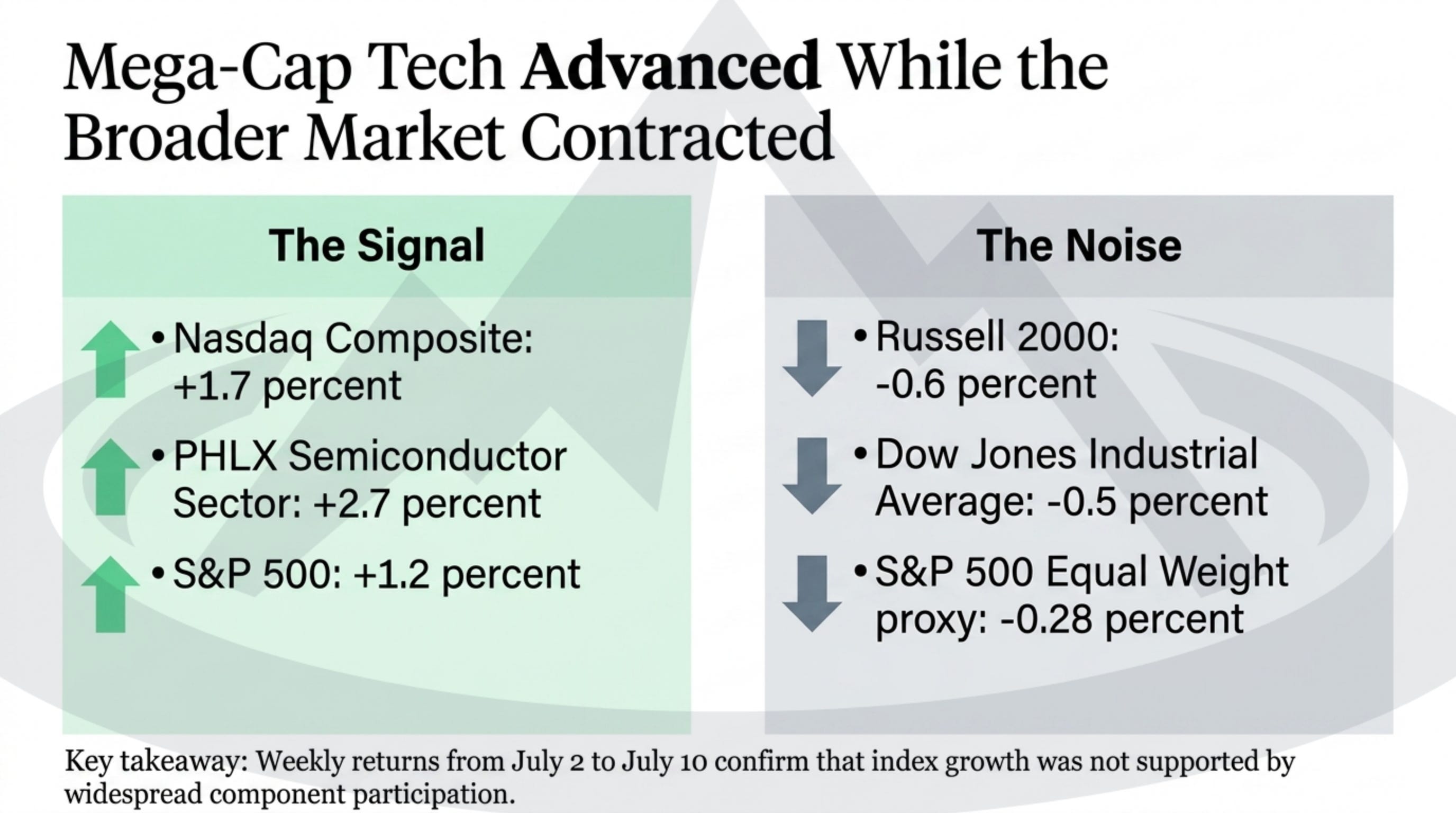
Start with the setup, in one picture. For the week into July 10, the mega-caps advanced while the broad market contracted underneath them. The Nasdaq and the semiconductors rose, but the Russell 2000, the Dow and the equal-weight S&P all fell. That is index growth without participation, and a market held up by a handful of names is a market with no cushion.
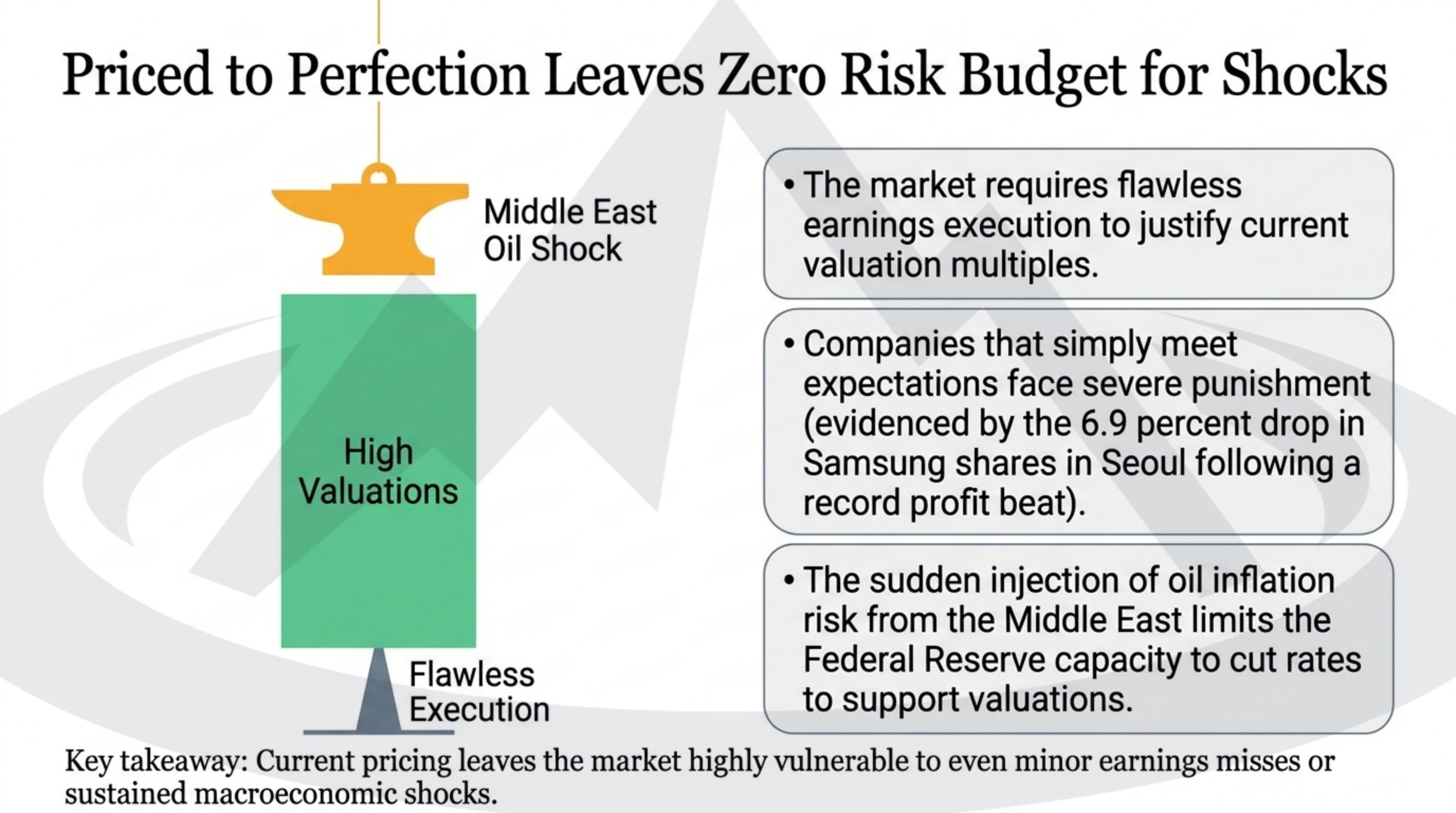
The second half of the setup was valuation. When a market is priced for flawless execution, it has no risk budget left for a shock. We flagged that any earnings disappointment, or a fresh jolt of imported oil inflation, would land hard precisely because the price left no room to absorb it. That was the fragility. This week supplied the shock.
Thread one: the crash had an address. When the selling came, everyone reached for the same phrase, the AI bubble is popping. The flow data disagreed. Foreigners pulled a record 137 billion dollars out of Asian tech in the first half of this year, the fastest pace in sixteen years, and the epicenter was Korea, not the S&P. This was a rebalancing out of the most crowded winners, not a fresh verdict on whether AI demand is real. A crowded trade does not need bad news to fall. It just needs everyone to stand up at once.
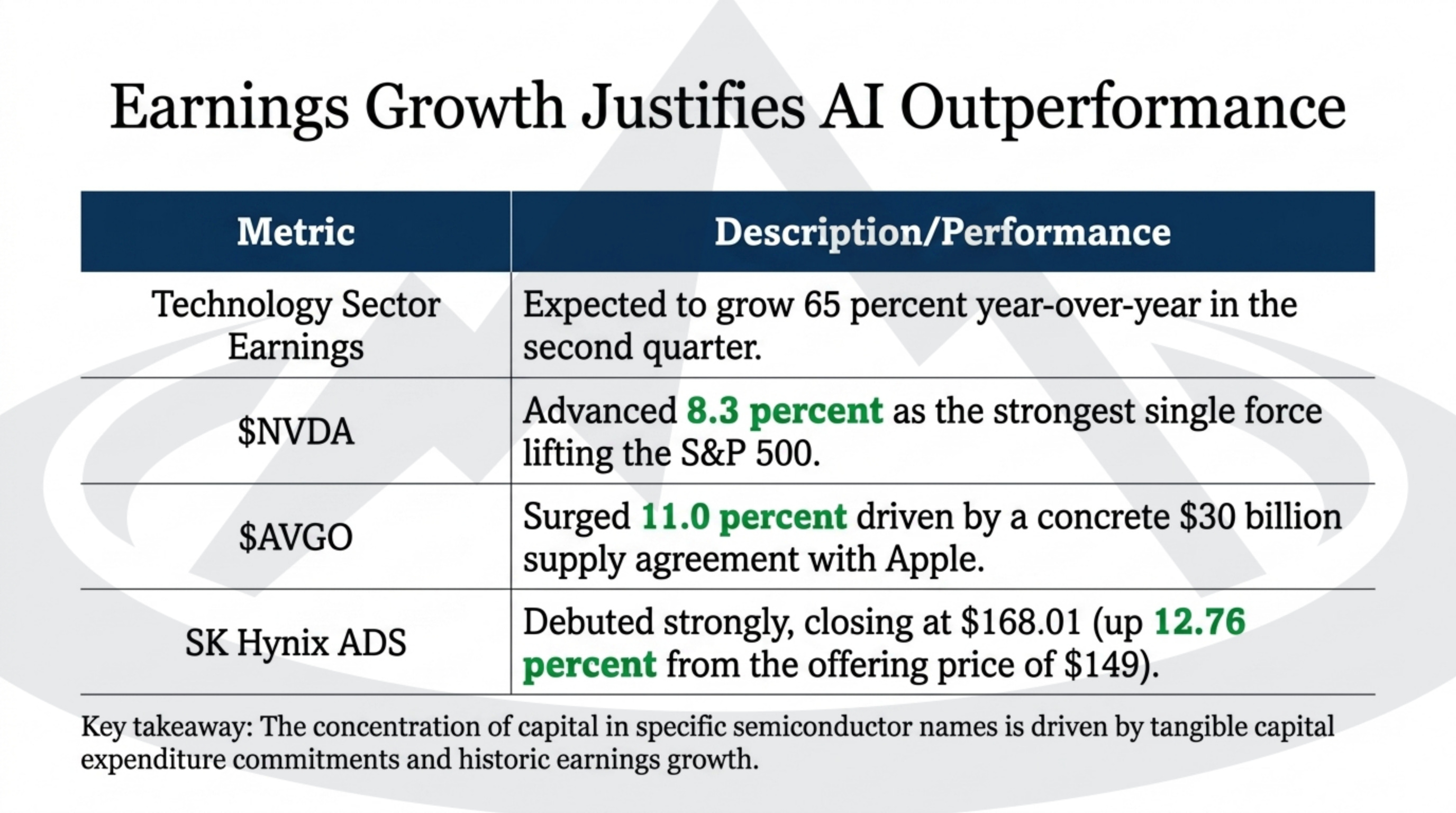
Thread two: a shortage is not a glut. The trigger that week was a phone maker raising its prices and blaming a memory shortage. The market sold every chip stock on demand and margin fears. Read that back slowly. A shortage is the opposite of a glut. When a buyer that large cannot get enough memory and has to pay up, that is scarcity, and scarcity is pricing power for the supplier, not evidence the customer is leaving. Our weekly work already had the concentration mapped, with the memory names doing the heavy lifting.
Thread three: the wrong thermometer. Into all of this, a soft consumer-price print sparked a relief rally in rates and long-duration equities. The same month, US import prices ran plus 7.1 percent from a year earlier, the hottest since 2022, and plus 4.2 percent even after stripping fuel out entirely. The consumer price index makes the headline. Import prices and the Fed’s preferred gauge quietly set the policy path and squeeze corporate margins. The market cheered the thermometer that flatters, not the one that binds.
Thread four: the un-crowded trade is now crowded. The reflex response to the unwind was the rotation, own the un-crowded, not-AI stuff, energy, defensives, nuclear. That was a good idea a year ago because almost nobody was doing it. Now every research desk prints it, which means the un-crowded trade is quietly becoming the next crowd. Contrarian is a moving target, not a destination you arrive at and park.
The through-line is one discipline. Separate the mechanism from the mood, because why a market moved tells you more about what comes next than how far it moved. A narrow rally, a rebalancing rather than a rout, a shortage read as a glut, an inflation gauge chosen for comfort, and a contrarian trade going mainstream. None of these are visible if you only watch the index close.
That is the whole method, dated and in writing, every week. The full weekly deep dives, the scenario odds and the exact conditions that would prove each call wrong are at moatpeak.com.
Educational research only. Not personalised investment advice. MB “MoatPeak Group”.